Office Tour Video: Plan, Shoot and Use It Well


November 17, 2026


The questions that produce a strong testimonial all do one thing: they ask for a story, not for praise. Ask what the customer was dealing with before, what they tried, why they chose you, what changed and how they know. Then ask for permission to use the answer. That sequence gives a buyer something to believe. A vague “great team, would recommend” gives them nothing.
This guide is for marketing leads, founders and investor-relations teams who will sit across from a customer, portfolio founder or sponsor, often on camera, and need an interview that turns into a case study, a testimonial video or a founder-series episode. Below are the questions in order, the follow-ups that add detail, the extra set for sponsors, and how to handle approvals.
A line like “great service” is positive, but it does not tell a prospective buyer what changed or why the result is believable. A buyer reading your site is asking a narrower question: “Did this work for a company like mine, and what happened?” Only a specific answer addresses that.
Marketing guidance reflects this. HubSpot’s guide to customer success stories treats the customer’s own words as proof of your ability to deliver, and says questions should draw out detail about challenges and execution rather than simply request praise. The practical rule: every question should invite a scene, a comparison or a measurement.
The second rule is that the customer talks about their world, not yours. Questions that start with “What were you trying to accomplish?” produce a better video than “What do you love about us?” because the answer comes with context a viewer recognizes as their own.

Pick the right voice. Choose the champion who used the product or service day to day, or the buyer who made the call and can speak to the decision. For a case study video you often want both: the decision maker for the why, and a user for the what-it-looks-like.
Then settle a few basics before anyone sits down:
These steps match what B2B interview guides recommend, including sending questions ahead and recording only after asking, as laid out in Kalungi’s guide to B2B customer testimonial interviews. If you want a framework for building the question list itself, designing interview questions so each one has a clear purpose helps you cut the ones that only fill time.
The order matters. Start easy, move to the story, finish with advice. Customers loosen up as they go, and the best material usually arrives in the middle.
The last one also gives you the permission on tape. Confirm the written release afterward.
This is the most underused part of a testimonial, and the one buyers relate to most.
Ask for one remembered moment when the old way caused trouble. A specific incident makes the original pain recognizable to a prospect far better than a broad label like “inefficient.”
The last question handles objections for you. When a customer says out loud what worried them and why they went ahead, the next buyer with the same worry hears the answer from a peer.
It is fine to let a customer mention something that was hard. Credible stories have texture, and a rough patch that got resolved reads as honest.
These are the questions that produce the quote you will pull out for a headline. They are also the ones most likely to need a follow-up, covered next.
Ending on advice tends to give you the cleanest sound bite, in the customer’s own voice, and the credit question settles attribution before the edit.
Most first answers are labels. Follow-ups are how you get from the label to the evidence, and they should be neutral, not leading.
| If the customer says | Ask |
|---|---|
| “It saved us a lot of time.” | Whose time, on which task, and over what period? |
| “Everything got smoother.” | Can you give me a specific example? |
| “The team was great.” | What did that look like day to day? |
| “Results improved 40%.” | What does that number measure, what period does it cover, and where did it come from? |
| “It was a game changer.” | What changed, and how do you know? |
The phrasing comes from the follow-up patterns recommended in Kalungi’s interview guide. For the numbers, ask what the metric means, the period and the system or evidence behind it. If it cannot be verified, leave the figure out.
A few habits make follow-ups work:
A B2B buyer is usually not deciding alone. They need to know the context, how hard the rollout was, and whether the result could repeat. Add these to the set above for a full case study:
That last question is easy to skip and shouldn’t be. Guides on B2B case studies, such as HubSpot’s case study interview questions, build the interview around the customer’s original problem, why they chose the provider, how it was solved and the measurable results. Asking what could be better, in the customer’s words, tells buyers you are not hiding anything.
Private companies, funds and portfolio businesses often cannot share exact revenue or deal figures. You still have options: percentages, time metrics, before-and-after comparisons, or a range. A founder who says “we cut our time to close from about six weeks to about three” gives a buyer more than one who declines to say anything.
Also ask whether anything else changed in the same period, such as a new hire or a new product. If something did, say so in the story or leave the causal claim out.
A sponsor interview is a different conversation. A sponsor is not describing a product they bought; they are describing what a partnership did for their goals. Whether you run conferences, accelerators or community events, ask about expectations before the event and outcomes after.
Before:
After:
Agreeing on success measures at the start prevents mismatched expectations at the recap, a point made in SQWAD’s sponsor guidance. If a sponsor’s goal is “awareness,” follow up by asking what would change in their business if awareness were perfect, as suggested in Clarity Media Partners’ sponsorship guide. For the after-event survey side, Experiential Executive’s sponsor survey advice recommends asking open-endedly why a sponsor gave its effectiveness rating.

A startup that just closed a round. Use the before state and decision questions with a customer who was an early believer. “What made you take a chance on a young company?” is the question an investor, a prospect and a recruit all want answered.
A private equity firm after an acquisition. Interview leaders from both sides. Ask what they expected from the combination, what the first 90 days looked like, and what each team would tell the other. The goal is a set of voices that read as one company.
A VC firm founder series. Use the before, decision and advice blocks with portfolio founders. Ask what the firm did that other investors did not, and what they would say to a founder choosing between offers.
An event organizer. Combine the sponsor questions with an attendee question or two: “What did you do after the event that you would not have done otherwise?”
The interview is half the work. The edit is the other half, and it is where trust is won or lost.
There is a legal side to this as well. The FTC’s consumer reviews and testimonials rule Q&A explains that when a business pays for or gives incentives for reviews, those reviews are also treated as testimonials under the rule, and that incentives should come with a clear disclosure of the relationship. If you offer a customer anything in exchange for appearing, talk to your counsel about how to disclose it, and never write a testimonial the customer did not give.
A customer who gives a sharp, specific answer in a dim conference room with a laptop camera still looks like an afterthought. Viewers judge credibility from the first second, before they hear the words. The same words, in good light with clean audio and a calm setting, read as confident and professional.
That is why we plan video interviews the same way we plan the questions. A strategic discovery call comes first, so the shoot is built around the outcome you need, whether that is a funding announcement, a client case study or a founder series. We bring portable studios and production teams to your office, your event or your portfolio companies, so customers sit in their own surroundings and nobody travels. And because the same set-up and style can be repeated across locations, a series of interviews looks like one body of work.
We have watched the same pattern play out for companies of every size: they spend heavily on product, fundraising, hiring and sales, and then put a phone-camera testimonial at the center of their story. The customer had something real to say. The format got in the way.
Our view is that a testimonial is a piece of evidence, and evidence should be gathered with care. Start with the discovery conversation: who needs to be convinced, what do they doubt, and which customer can answer that doubt in their own words? Then build the questions around that person’s story, not around a template.
When the story is right and the production is premium, the result keeps working long after the shoot: on your website, in sales presentations, in investor updates, in recruiting and in paid campaigns. That is why we design each project around a strategic objective, and why we bring our portable studios to you, so customers are relaxed, the disruption is small and the footage looks consistent from one location to the next.
Real people, real experiences, real outcomes. That is the content that tells your story before the sales conversation starts.
Kevin
If you are planning case study videos, a founder series or a funding announcement, we handle the on-site production so your interviews look as credible as they sound. Our STANDARD branding package starts at $2,000 per shoot and ENTERPRISE starts at $3,500 per shoot. A BRANDING ADD-ON is $1,000 per shoot. Events are covered by our NETWORKING ($2,500), SUMMIT ($4,500) and CONFERENCE ($8,000) packages. See the details on our branding photography and video page, or look at event and conference coverage.
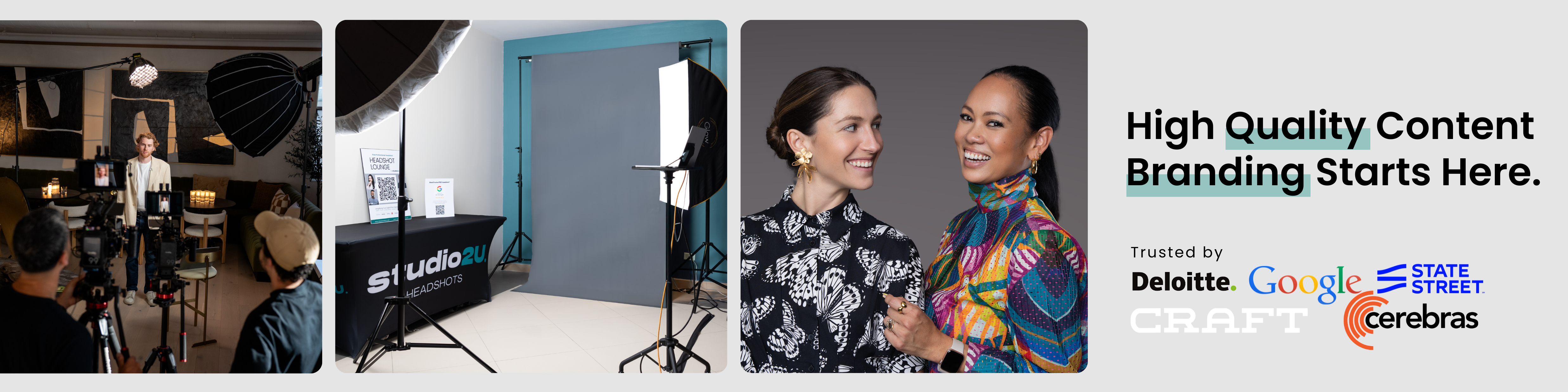
If you also need team headshots to run alongside the interviews, our on-site headshot service brings the studio to your office. You can see everything we do on our services page.
Start with what they were dealing with before, what they tried and why they chose you. Then ask what changed, for a specific example, and for any measurable result with its period and source. Finish by asking what they would tell a peer, and whether you can use their words and how they want to be credited.
For a short testimonial video, 6 to 10 questions are enough. A full B2B case study can run 15 to 20, spread across context, before state, decision, experience, results and advice. Choose the set that fits your goal and use follow-ups rather than working through a rigid list.
Ask for a percentage, a time comparison or a range instead. A before-and-after statement in the customer’s own words still gives buyers something to weigh. If a figure cannot be checked, leave it out and let the example carry the story.
Yes. Ask before you record, confirm the intended uses, agree how the customer is credited and let them approve the final cut or quote. Keep that approval on file. If you give any incentive for the testimonial, read the FTC’s guidance on disclosing it.
Sponsor questions focus on goals, expectations and measured results from a partnership, not on a product’s performance. Ask what success meant before the event, how it was measured, what worked and what could improve next time.
