How to Schedule Headshots at Work Without the Chaos


October 9, 2026


Diversity in corporate imagery means depicting people from varied backgrounds in authentic roles and real settings, never as background decoration or a token face. The single highest-impact move is to run a targeted visual audit now and prioritize commissioning original photography for your highest-traffic brand and recruitment pages. Research from Wharton backs this, and firms like Studio2U build entire production workflows around it.
TL;DR:
- Audit high traffic careers, leadership, hero, and sales pages; tag representation by role, assign one brand owner, and involve employee groups during gap analysis.
- Use original employee photography for careers, leadership, culture, and investor materials; reserve stock for generic topics, since familiar stock can undermine inclusion claims.
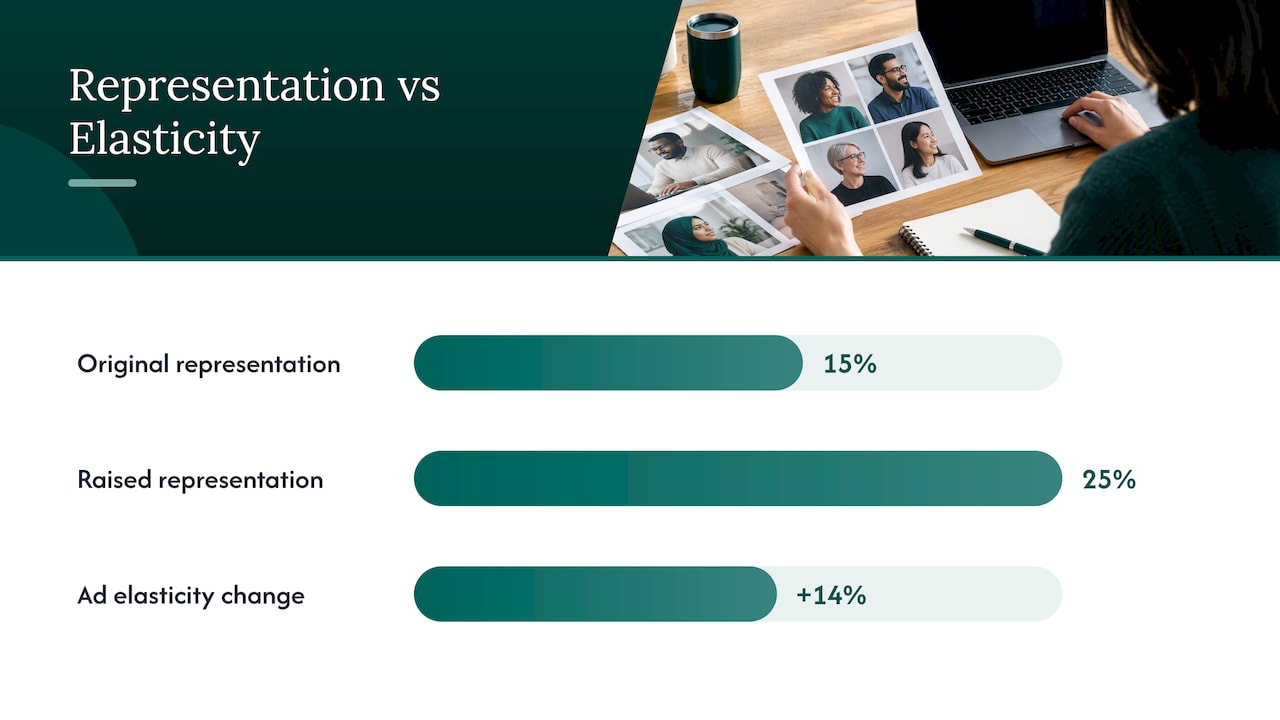
- A mortgage advertising study found that raising minority representation from 15% to 25% increased advertising elasticity by 14%, but results vary by audience and execution.
- Test new photography against current images on the same page, track engagement and recruitment outcomes, and secure releases that specify duration and channels.
- Research links representation with stronger engagement, but the benefit can fade when audiences perceive the brand’s motive as public relations.
Before you touch a camera or a stock library, you need rules that hold up across every campaign, hire, and office opening. These five principles keep imagery honest rather than performative.
Authenticity comes first. Real employees in real workspaces read as credible in a way staged stock scenes never do, and audiences increasingly notice the difference. Collective representation matters just as much: when a single person of color or the one visibly disabled employee appears in every photo on your site, that person becomes a stand-in for an entire demographic, which is exactly the burden UC Davis’s inclusivity guidance warns against. Spread representation across multiple people and multiple images instead.
Role equity is where many brands quietly fail. It is common to see diverse faces in support or entry-level shots while leadership pages stay homogeneous. If your executive team photography does not reflect the same range you show on your careers page, the mismatch is visible and it undermines trust.
Watch for visual shorthand, too. Props, flags, or clothing used to signal someone’s identity rather than their role flatten a person into a symbol. The UC Davis guide specifically recommends avoiding these crutches and instead asking subjects how they want to be portrayed.
When sourcing from stock libraries, search hygiene matters:
Pro Tip: Before approving any image, ask whether the same photo would feel honest if the subject’s identity were different. If the scene only works because of who is in it, it is probably a stereotype, not a story.
Most brands have never actually counted who appears in their own imagery. A structured audit turns a vague sense of “we should be more diverse” into a prioritized action list.
Set a realistic timeline: a full inventory and tagging pass for a mid-sized site typically takes one to two weeks, with remediation shoots scheduled in the following quarter. Assign one owner, usually someone in brand or communications, to keep the tagging schema consistent.
Pro Tip: Loop in employee resource groups during the gap analysis, not just during the shoot. They often catch subtle issues, like a leadership gallery that technically includes diversity but places every underrepresented executive in the back row.

The choice between commissioning original photography and licensing stock imagery comes down to a tradeoff between authenticity and speed. Original photography of real employees carries more credibility and a stronger employer-brand lift, but it costs more and takes longer to schedule. Premium inclusive stock fills gaps quickly and cheaply, but practitioner research warns that heavy reliance on stock for inclusion claims carries reputational risk if audiences recognize the images from elsewhere.
A practical rule: use original photography for anything claiming to represent your actual team, leadership, or culture, such as careers pages, “about us” sections, and investor decks. Reserve stock for generic contextual imagery, like a blog header about industry trends, where no specific claim about your workforce is being made.
When you do commission original shoots, a solid brief covers:
On logistics, portable studio setups let a production team move between offices or departments in a single day, which keeps original photography realistic even for larger teams. Build in time for alt-text writing and caption review once images are delivered, since accessibility is part of inclusive imagery, not an afterthought bolted on later.
How you frame a shot carries as much meaning as who is in it. Group scenes showing people genuinely collaborating, reviewing a whiteboard together, working through a problem, sharing a laugh during a real break, read as more credible than individual portraits stitched together to imply a diverse team.
Favor contextual cues over identity props. Showing someone’s actual work, a line of code on a screen, a client call in progress, a prototype on a workbench, communicates competence and belonging far more effectively than a visible symbol meant to signal identity on its own. Group photo approaches that mix roles and seniority in the same frame also reduce the tokenization risk that comes from singling out one person.
Leadership visibility matters here too. If your technical and leadership imagery only ever shows one demographic while your lifestyle and culture shots show the full range of your workforce, viewers notice the split.
A few technical choices protect dignity in the frame:
Pro Tip: Review a shot list before the session and ask who is shown doing versus who is shown watching. Inclusive imagery puts a range of people in the “doing” role, not just in the frame.
Brand photography guidelines built around these composition choices tend to age better, since they do not depend on a particular design trend to feel authentic.
The research case for inclusive imagery has gotten considerably more specific in recent years. A study of television commercials for mortgage refinancing found that increasing minority representation in ads from 15% to 25% raised advertising elasticity by 14%, meaning the same ad spend generated a measurably stronger response.
A 2025 Kellogg study found that consumers are often willing to pay more for products featured in diverse ads, driven by higher perceived creativity and product variety. Separately, a 2026 Journal of Business Ethics study analyzing over 14,000 brand social posts found that racial minority representation correlated with higher engagement across both minority and nonminority audiences, with one important caveat: perceived brand motive moderates the effect, so diversity that reads as PR-driven can lose its engagement benefit.
For marketing teams building a measurement plan:
When presenting results to stakeholders, use conservative framing drawn from the literature rather than promising guaranteed lifts, since effects vary by category, audience, and execution quality according to broader meta-analyses of advertising diversity effects.
A typical engagement starts with a discovery call to understand team composition, brand goals, and which pages or decks need the most urgent attention. From there, casting draws on the real employee population rather than hired models, and on-site portable production minimizes disruption to the workday while capturing natural interactions instead of staged poses.
Editing and delivery follow a fast turnaround, so new assets reach careers pages, investor decks, social channels, and event recap content while the context is still current. The same production session is typically structured to generate multiple deliverables rather than a single photo set, which keeps representational gaps from reopening a few months later.
Imagery that implies a demographic claim, like a careers page suggesting a level of workforce diversity that does not reflect reality, can create legal exposure around deceptive advertising or misleading recruitment practices, separate from the reputational risk of being called out publicly. Consent is the other major legal pillar: every employee or subject photographed for external use should sign a release specifying how images may be used, for how long, and across which channels.
Ethically, the line between representation and exploitation often comes down to whether a person’s identity is being used to sell something unrelated to their actual role or experience. Featuring a disabled employee prominently in a diversity campaign while offering no accessibility accommodations internally is the kind of mismatch that draws scrutiny. The safest practice is to let imagery reflect documented reality: current team composition, actual roles, and policies that are genuinely in place, with employee resource group review built into the approval process rather than treated as optional.
The research is consistent enough to act on: representation that looks real moves engagement and willingness to pay, while representation that looks like PR loses its effect. For the next 90 days, I would prioritize three things: run the audit, fix your two highest-traffic gaps with original photography, and set one measurable test. Internal experiments work for incremental fixes; a visual partner earns its cost when you need full alignment fast.
— Kevin
When the audit reveals real gaps and the clock matters more than the learning curve, we built our services around closing that distance fast. Our headshot packages replace an outdated or mismatched leadership gallery with consistent, authentic portraits of the team you actually have. Our broader branding photography and video packages cover team photography, culture content, and testimonial video for careers pages and investor decks that need to show real people in real roles.
For organizations running conferences or portfolio-wide events, our networking, summit, and conference packages turn one event into a content engine: candid team scenes, short interviews, and b-roll that fuel recruitment and social content for months. Related reading on corporate wellness programming from our partners at DCFB Wellness covers how inclusive event design extends beyond imagery into the experience itself.
Reach out through our home page to start with a discovery call and get a fixed quote for your next shoot.
A corporate picture is a professional photograph used to represent a business, its employees, or its leadership across websites, marketing materials, and recruitment pages. It typically covers headshots, team photography, and environmental shots of the workplace itself.
Workplace diversity describes a workforce that includes people across a range of races, ethnicities, ages, genders, abilities, and backgrounds, reflected accurately in both policy and visual representation. Authentic imagery shows this range across all role levels, not just in entry-level or support positions.
Common examples of workplace diversity include racial and ethnic diversity among staff and leadership, representation of people with visible and invisible disabilities, and a range of age groups working across all levels of an organization. Gender diversity in technical and leadership roles is another frequently cited example.
A professional image in the workplace refers to how an employee or organization presents itself visually and behaviorally, including attire, conduct, and the photography used to represent that person or team externally. For corporate imagery specifically, it means photography that accurately and respectfully reflects a person’s actual role and competence.
