5 Zone Event B-Roll Checklist: Editor-Ready for Conferences
%20(1)%201.png)
.png)
.png)
August 29, 2026
%20(1).jpg)

Adopt a short, use-specific headshot policy that separates mandatory operational uses, like ID badges, from opt-in marketing uses, and captures a signed release for each. Employers can require photos for internal identification without much legal exposure, but public-facing use needs separate employee consent, documented in writing. Studio2U builds this two-tier structure into every corporate shoot it runs, because it’s the fastest way to avoid disputes later.
TL;DR:
- Using employee headshots for public-facing marketing requires explicit written consent and a broad release, which should be reviewed by legal counsel for enforceability.
- A headshot policy must clearly differentiate internal ID purposes from external marketing uses, with separate permitted use categories and approval authorities documented.
- States with stricter biometric laws or protections demand tailored consent language and careful legal review, especially for broad or perpetual release clauses.
- Implementing a consistent rollout process involves cross-department approval, scheduled photography sessions, and tracking adoption rates above 90 percent within the first cycle.
- Contract negotiations with photographers should specify deliverables, licensing versus ownership rights, data security, and retention, with license clauses being preferable to full ownership transfers.
Most companies write their photo rules as an afterthought, tucked into an employee handbook next to the dress code. That’s backwards. A working employee headshot policy is a standalone document with five parts: purpose, scope, permitted uses, approval authority, and disclosure terms. Skip any one of these and you may end up fielding one-off complaints instead of pointing to a policy.
Purpose and permitted uses should draw a hard line between internal and public use. A badge photo that only appears in your access control system is a different animal than a headshot on your company’s “About Us” page or in a LinkedIn recruiting post. University and district policies consistently treat these as separate categories, and yours should too.
Scope answers who this applies to and who’s exempt. Contractors, remote staff, and executives sometimes get carved out, sometimes don’t. Decide before you launch, not after someone asks why the CEO’s photo predates the last three rebrands.
Approval authority names who signs off on final images before they go live, who can request a retake, and who has removal power if a photo violates content standards.
A workable policy includes:
Here’s a policy snippet HR can adapt directly:
That single paragraph, dropped into a handbook, resolves most of the ambiguity that otherwise turns into a grievance six months later.
The distinction between narrow and broad release language is where most companies get sloppy. A narrow release covers a specific use, like an internal directory photo, and expires or needs renewal if the use changes. A broad release grants ongoing rights across marketing, recruiting, press, and social media, often without an expiration date. Use narrow releases by default. Reserve broad releases for employees who actively participate in marketing campaigns, like a founder story video or a testimonial.
Every employee photo release, regardless of scope, needs five clauses:
Legal drafting resources consistently flag broad, perpetual releases tied to commercial use as the clauses most likely to need counsel review, since they can lock in usage rights an employee later regrets granting.
For collection, most mid-size and larger employers now route consent through their HRIS at offer acceptance or during onboarding rather than a paper form filed in a cabinet. Digital collection gives you a timestamp, a version of the exact language the employee agreed to, and an audit trail if a dispute surfaces years later. Whatever system you use, retain the release date, the specific language version signed, and any revocation requests as permanent metadata tied to the employee record.
Pro Tip: Build your release with two checkboxes instead of one blanket signature: “I consent to internal ID use” and “I consent to marketing use.” It costs nothing extra and gives you a defensible record for exactly what each employee agreed to.
A usable sample release, drafted narrow, reads something like: “I authorize [Company] to photograph me for the purpose of internal employee identification and directory listings. I understand this photo will not be used in external marketing, advertising, or public communications without my separate written consent, which I may grant or decline at any time.” Free release templates are widely available as starting points, but every one needs a scope and revocation clause before it’s usable.
The biggest legal exposure in a headshot policy isn’t image rights. It’s how the policy treats attire, appearance, and accommodation requests. A rule that bans headwear will collide with religious accommodation obligations under federal and state discrimination law almost immediately. Write standards that are neutral and job-related, never content-based bans dressed up as style guides.
Discrimination risk clusters around a few predictable spots:
Privacy and state law add a second layer. Some states have stricter biometric and likeness laws than federal baseline, and a handful require more explicit consent language for commercial image use than others. If your company operates across multiple states, don’t assume one release template covers every jurisdiction, loop in counsel before rolling a broad-use release out company-wide.
Avoid content-based prohibitions that aren’t tied to a legitimate business reason. Banning “political content” from a badge photo background is defensible. Banning specific religious symbols by name is not, and it invites a discrimination claim you can’t win.
Set two review checkpoints before launch: HR review for tone, consistency, and accommodation language, and Legal review specifically for the release form and any state-specific consent requirements. Skipping the legal pass on the release form is the single most common gap companies discover only after an employee leaves and disputes ongoing marketing use of their photo.
Getting from “we should have a policy” to a fully photographed workforce takes more coordination than most HR teams budget for. Here’s a sequence that works for companies of most sizes:
A short FAQ memo distributed alongside the announcement, covering what happens if someone declines, how long photos take, and where images get used, heads off half the questions HR would otherwise field one at a time.
Whoever you hire to shoot headshots should deliver more than a folder of JPEGs. Your contract needs to specify minimum deliverables: file formats (high-resolution JPEG and a print-ready TIFF or PNG at minimum), a defined resolution floor, how many retouch rounds are included, and a firm turnaround window. Studio2U’s standard corporate packages commit to five-day turnaround, which is the benchmark worth holding any vendor to.
Contract clauses to require:
Skipping the licensing clause is the most common contract gap. Without it, you may own finished headshots but not the underlying raw files, which becomes a problem the next time you need a re-crop for a different platform.
A policy without enforceable image standards produces a directory page that looks like ten different companies stitched together. District and university procedures typically require head-and-shoulders framing with the face occupying at least half the image height, a plain or brand-consistent background, and high resolution suitable for both web and print use.
Standards worth codifying:
Guidance from institutions using Workday-based photo standards consistently reserves HR’s right to reject and request a retake for any image that doesn’t meet these bars, and that right needs to be written into your policy explicitly, not assumed.
A five-line QA checklist covers most review needs: face fills roughly half the frame, background matches brand guidelines, attire meets standards, no prohibited items visible, file meets resolution requirements. Studio2U’s corporate headshot guidelines and attire guidance walk through this in more visual detail if you’re building your own reference sheet.
Some employees will decline, and your policy needs a documented path for that before it happens, not during the awkward conversation after. Reasonable alternatives include an internal-only image visible solely in HR systems, or a default avatar for public-facing directories where photos aren’t operationally required.
This keeps most disputes resolved at the HR level rather than escalating into a formal grievance.
Different uses call for different retention timelines. ID and badge photos can reasonably follow a seven to ten year refresh cadence, while marketing images should be reviewed and potentially refreshed any time the employee changes roles significantly or after a rebrand.
Departing employees deserve particular attention here. If someone leaves and their headshot remains on a marketing page or recruiting deck, that’s a policy gap, not a minor oversight, and it should trigger an automatic removal review as part of offboarding.
Two starting templates make the rest of this actionable. For narrow consent, use the ID-photo release language from the section above. For broad consent, add explicit marketing-use language with a revocation clause, and route it through Legal before wide use.
| Checklist item | Owner | Frequency |
|---|---|---|
| Policy and release language review | HR + Legal | Annually or after a policy change |
| Vendor contract clause audit | Procurement + HR | Per new vendor engagement |
| Image quality QA | HR or vendor lead | Per shoot |
| Retention and removal audit | HR | Annually |
Map this checklist against your handbook sections, purpose, scope, consent, retention, and you have a complete policy skeleton. Studio2U’s brand photography guidelines cover the approval and deliverables language in more detail if you’re drafting the vendor side.
Studio2U runs portable studios into client offices nationwide, which means we see the same policy gaps repeat across companies of every size. The most common one: no signed release before the camera comes out. We build release collection into the pre-shoot workflow, not as paperwork chasing people down afterward.
Consistent deliverables matter as much as consent. We standardize framing, lighting, and file specs across every session in a rollout, so a 200-person company photographed over three weeks gets one cohesive directory, not three visibly different photo shoots stitched together. The pitfall we flag most: companies write a policy but skip the vendor contract clauses that actually enforce it. Get both right before shoot day.
Writing the policy is half the job. Executing it consistently across every department, office, and new hire cohort is the other half, and that’s where most internal programs stall out. Studio2U brings portable studios directly to your offices nationwide, so every employee gets photographed under identical lighting, framing, and brand standards, no outsourcing the consistency problem to whichever manager owns the camera that week.
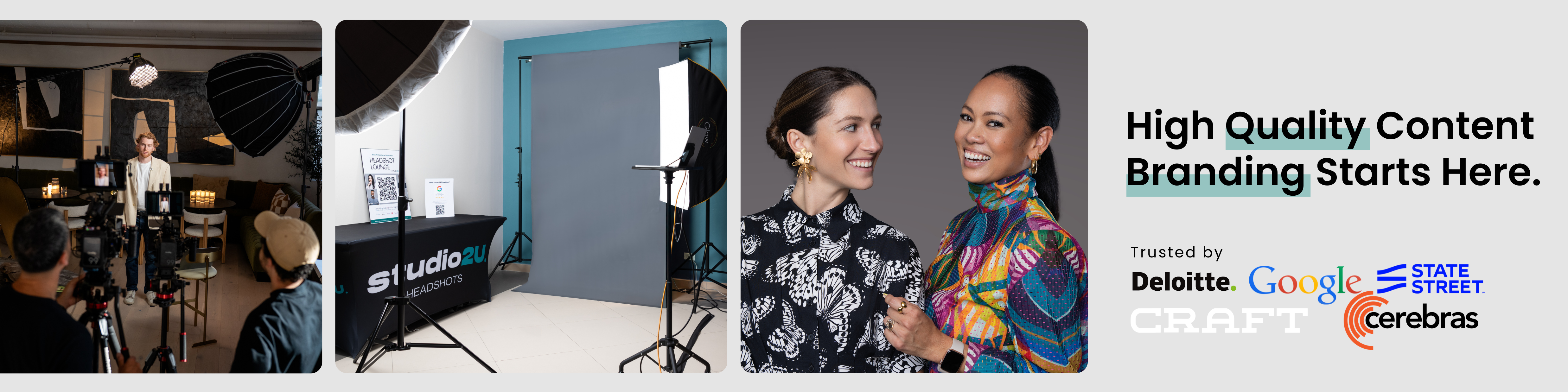 We handle release collection as part of the shoot workflow, deliver retouched, policy-compliant images within five business days, and can coordinate across multiple office locations without your team managing three different photographer contracts. If your policy is drafted and you need execution that matches it, request a proposal from Studio2U and get your rollout calendar built around your actual headcount and office footprint.
This article is general information, not a substitute for advice from a qualified lawyer. Consult a qualified legal professional about your own circumstances before acting on anything here.
Most policies require head-and-shoulders framing, a plain or brand-consistent background, business or business casual attire, and no pets, avatars, or other people in the frame. HR typically retains the right to request a retake if an image doesn’t meet these standards.
Avoid busy patterns, logos from other organizations, political symbols, and backgrounds that clash with your company’s brand palette. Solid, neutral clothing colors photograph most consistently across a large employee directory.
This depends entirely on your release’s stated duration and scope; a narrow ID-use release should be removed at offboarding, while a marketing image needs to be pulled per your removal procedure once you’ve left. If your release didn’t specify an end date, request removal in writing and expect resolution within one to two weeks under most policies.
Employers can generally require photos for legitimate operational needs like ID badges without separate consent, but using that image publicly, in marketing, recruiting, or press materials, typically requires your written agreement first.
Yes. Studio2U builds signed release collection into its pre-shoot workflow so companies aren’t chasing paperwork after employees have already been photographed.
