Consistent Finance Headshot Style for CFOs, Advisors and Teams
%20(1)%201.png)
.png)
.png)
July 28, 2026
%20(1).jpg)

A founder story video is a short, founder-led narrative — typically two to five minutes — built to drive B2B outcomes: investor confidence, enterprise trust, lead conversion, and employer brand lift. The single best next step for any marketing or HR team is to prepare a one-page creative brief and schedule an on-site shoot with a mobile production provider.
Trust and investor signals: Investors look for founder mission as a leading indicator of long-term commitment when evaluating startups.
Lead conversion: A single authentic founder-led video drove $100,000 in overnight sales for consumer brand Poppi.
Employer brand lift: Founder visibility on career pages and LinkedIn directly influences candidate quality and pipeline speed.
Recommended next step: Draft your brief today, identify three must-tell moments from the founder’s history, and book an on-site shoot.
studio2U cites that consistent branding can lift revenue by 23% — and a founder story video is one of the most direct ways to make that consistency visible across every channel.
How do you plan the shoot and write a brief vendors can actually use?
What do founder story videos typically cost, and how long do they take?
Where should you distribute the video, and what KPIs should you track?
How do you choose the right vendor for a founder story video?
Founder narratives do something a product spec sheet cannot: they signal commitment. Enterprise procurement teams, institutional investors, and senior recruits all make decisions partly on whether they trust the people behind the business. A well-produced entrepreneurial journey video puts that trust signal in front of them before the first sales call.
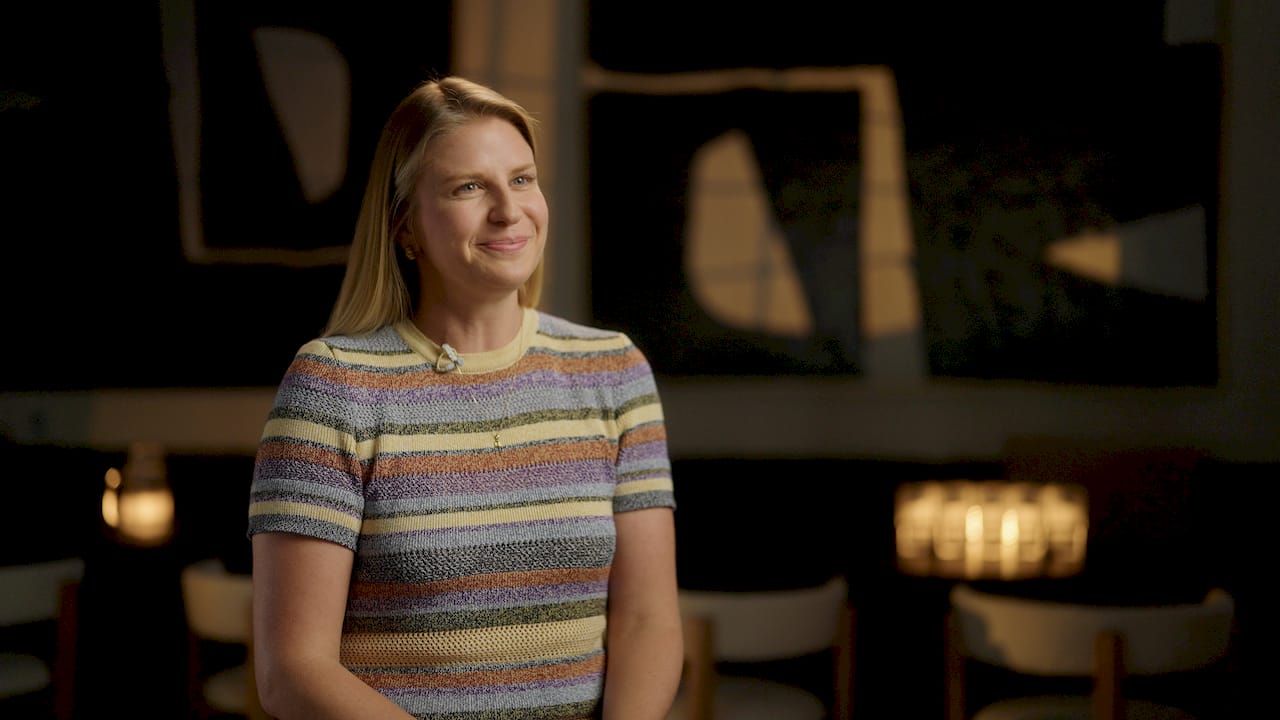
The use cases span the full funnel. In pitch decks, a two-minute founder clip replaces three slides of biography. On career pages, it answers the candidate question “Who am I actually working for?” In sales enablement, a rep can drop the video into a follow-up email instead of writing a paragraph about company culture. On LinkedIn, short clips from the same shoot function as thought leadership without requiring the founder to write a word.
Founder-led companies that maintain passion are better positioned to make bold, irreversible bets during technological inflection points — a message that resonates with both investors and top-tier talent who want to join a company still moving fast.
Three non-negotiable elements separate a B2B founder video that converts from one that gets politely ignored.
Narrative arc. The structure is always the same: the problem the founder saw, the moment they committed, and the traction that proves the bet was right. Early hardship and pivot decisions are credibility-building material, not liabilities. Anya Chang going from couch-surfing to a $7M startup is memorable precisely because it is specific.
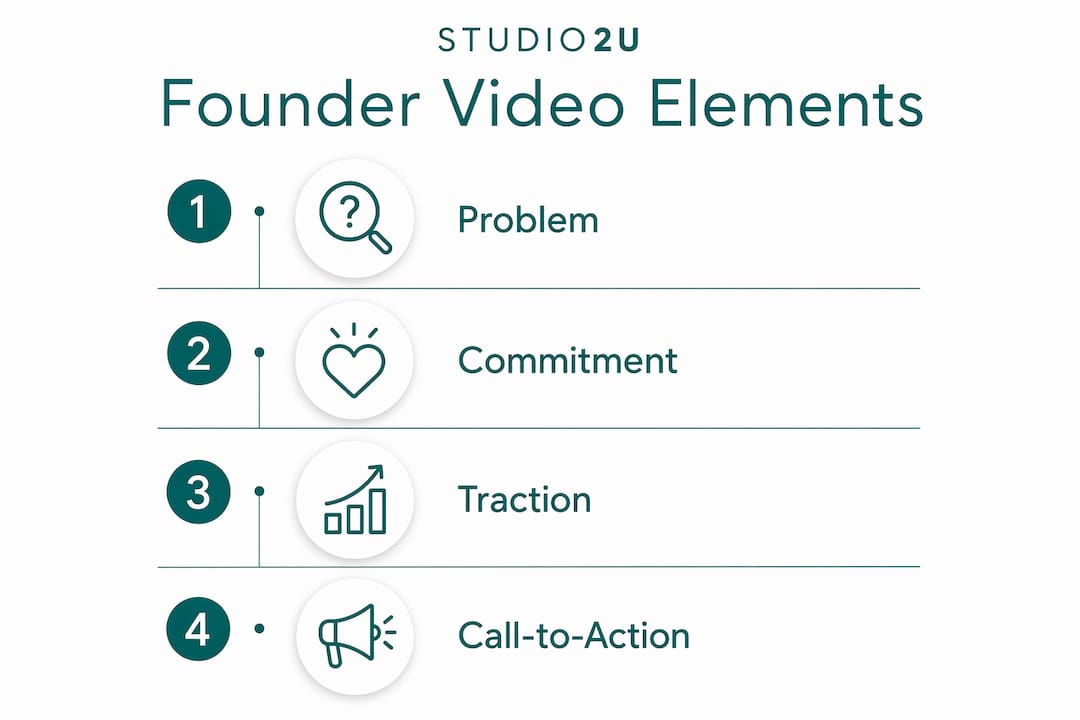
Authenticity over polish. Scripted pitches read as scripted. Selectively exposing challenges — a product bug, a wrong hire, a pivot that hurt — signals authenticity and preserves the “startup speed” perception that investors and talent value. Zoom CEO Eric Yuan has built 15 years of stakeholder trust partly by staying candid about ongoing technical work.
Format discipline. For LinkedIn and sales emails, keep the primary cut to 90–120 seconds. A full personal story documentary for investor relations or career pages can run three to five minutes. Request b-roll of the workspace, product, and team during the same shoot — it cuts editing time and gives you repurposing material for months.
Shoot in 16:9 for web and 9:16 for social simultaneously
Capture clean audio with a lapel mic as backup to the boom
Plan at least three b-roll setups: product in use, team interaction, founder in motion
A tightly focused one-page brief cuts shoot time and reduces the supervision a marketing manager needs to be present for. Without it, shoots drift, and you end up with two hours of footage that yields one usable clip.
Essential brief elements:
Target audience and primary distribution channel (LinkedIn vs. investor deck vs. career page)
Message hierarchy: the one thing the viewer must remember
Must-have shots: talking head, b-roll list, any product or location shots
Location and logistics: on-site address, parking, room prep, lighting constraints
Approvals: who signs off on the final cut, maximum revision rounds (two is standard), and deadline
Stakeholder coordination. Get legal to sign off on talent release forms before shoot day, not after. Identify one internal point of contact who can make decisions on set. Build in a 48-hour review window after the rough cut is delivered.
Sample interview prompts to include in the brief:
“What problem were you trying to solve, and why did no one else see it?”
“Describe the moment you knew this was going to work.”
“What did you get wrong in the first year, and what did that teach you?”
Capturing multiple aspect ratios and short edits during the same shoot maximizes ROI and gives your team repurpose-ready assets without a second booking.
| Production Model | Typical Cost Range | Best For |
|---|---|---|
| On-site mobile short-form | — | LinkedIn, sales enablement, career pages |
| Full studio shoot | — | Investor relations, brand campaigns |
| Remote interview / animated | — | Budget-constrained or distributed teams |
| Phase | Typical Duration |
|---|---|
| Pre-production (brief, location scout, talent prep) | 3–5 business days |
| Shoot day | 2–4 hours on-site |
| Rough cut delivery | 5–7 business days |
| Revisions and final delivery | 3–5 business days |
| Total elapsed time | 2–4 weeks |
Key cost drivers beyond crew size: b-roll complexity, number of editing rounds, music licensing, and whether you need caption files and social cuts included in the package. Clarify all of these in writing before signing.
On-site mobile shoots eliminate location fees and reduce travel costs
Bundling social cuts into the original package is almost always cheaper than ordering them separately
Rights and usage scope (internal only vs. paid media) can double the licensing cost if not negotiated upfront
Use a platform-first distribution plan and map every KPI to a specific business goal. “Views” is not a KPI. “Demo requests from the LinkedIn post” is.
A single shoot can feed six months of content. The full cut goes on the website and in investor decks. A 60-second clip goes on LinkedIn. A 30-second version runs as a pre-roll ad. Pull a quote from the transcript for a text post. Repurposing across channels is where the economics of founder videos actually work.
KPIs by goal:
Awareness: video view rate (target 40%+), share rate, LinkedIn impressions
Lead conversion: demo request lift on pages where the video is embedded, email click-through when the video is included in sequences
Talent attraction: career page time-on-page, application rate change after the video goes live
Investor signals: deck open rate, time spent on the founder slide, follow-up meeting conversion
One Poppi TikTok from a founder-led story drove $100,000 in sales overnight — a reminder that distribution channel and timing matter as much as production quality.
Prioritize vendors that demonstrate repeatable B2B work, mobile or on-site capability, and written turnaround commitments. A vendor who has only shot consumer lifestyle content will struggle with the tone and pacing a B2B startup founder interview requires.
Questions to ask every vendor:
Can you show me three examples of B2B founder or executive videos you have produced?
What is your standard turnaround from shoot day to rough cut delivery?
Do you provide social cuts and caption files in the base package?
How do you handle talent release forms and usage rights?
What is your revision policy, and how many rounds are included?
Red flags:
Deliverables described vaguely (“a video package”) with no shot list or asset spec
No written release process — a common gap that creates legal exposure later
Turnaround times stated as “depends on workload” rather than a committed SLA
No mention of repurposing assets or aspect ratio variants
Studio2uheadshots offers mobile on-site production with a five-day image turnaround and enterprise-friendly deliverables — the kind of written commitment worth asking every vendor to match.
A disciplined day-of checklist ensures the shoot yields repurpose-ready clips and reduces postproduction costs. Surprises on shoot day are almost always the result of skipped preflight steps.
| Checklist Item | Owner |
|---|---|
| Signed talent release forms | Marketing/Legal |
| Backup lapel mic tested | Production crew |
| Lighting test completed 30 min before talent arrives | Production crew |
| Talent brief reviewed (key messages, interview prompts) | Marketing lead |
| Asset tagging convention confirmed with editor | Production crew |
Sample shot list:
Talking head: founder at desk or in branded space (primary interview, 60–90 min)
B-roll set 1: product in use or team working (15 min)
B-roll set 2: founder in motion, walking or presenting (10 min)
Cutaway: whiteboard, office details, brand signage (10 min)
Interview prompt bank for founder narratives:
“What did the first version of this look like, and what was wrong with it?”
“Who told you it wouldn’t work, and what happened next?”
“What does winning look like in five years?”
Founders who have done long-form interviews — like Anya Chang’s episode recounting early hardship — consistently produce the most usable material when prompts surface specific moments rather than general opinions.
Treat a founder video as a recurring stakeholder touchpoint, not a campaign asset. Recurring founder updates reinforce trust and keep the brand feeling fast-moving — a perception that matters to investors, enterprise buyers, and candidates alike.
Recommended cadence:
Quarterly micro-update: 60–90 seconds, tied to a product milestone or market development
Event-triggered deep dive: new funding, major hire, product launch, or pivot — full three-to-five-minute cut
Annual founder biography refresh: update the primary “about us” video when the company’s story materially changes
When a retainer makes sense: If your team is producing more than four founder clips per year, a retainer with a production partner typically lowers the per-shoot cost by 20–30% and guarantees crew availability. Budget for a half-day on-site capture every quarter.
Pro Tip: Brief the founder on three specific stories before every shoot — not talking points, but actual moments. “The day we almost ran out of runway” produces better footage than “our commitment to customer success.”
Map each update to a business trigger: funding, hiring ramp, product release, or competitive shift
Keep micro-updates under two minutes to maintain completion rates on LinkedIn
Archive every cut with consistent file naming so your team can find and reuse clips without a search
If the production logistics of a founder story video have been the bottleneck, studio2U removes the friction entirely. Rather than booking a studio, coordinating travel, and managing an unfamiliar crew, your team gets a mobile production unit that arrives at your office ready to shoot.
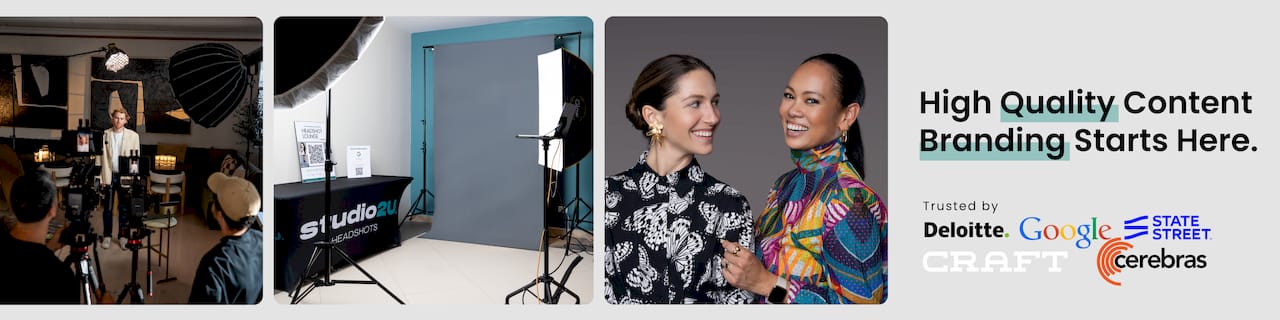
Studio2uheadshots specializes in on-site corporate video and photography for financial services firms, startups, and enterprise teams. The five-day image turnaround and live photo viewing mean your marketing team is not waiting weeks for assets. Consistent branding across your founder video, team headshots, and PR photography is what Studio2uheadshots cites as the driver behind a 23% revenue lift linked to brand consistency. Every package includes repurpose-ready deliverables: social cuts, caption files, and aspect ratio variants built into the shoot plan from day one. Book your on-site founder story shoot and walk away with a full asset library, not just a single video file.
A founder story video drives the most measurable B2B outcomes when it is produced on-site, briefed precisely, and distributed across multiple channels from a single shoot.
| Point | Details |
|---|---|
| Brief before you book | A one-page brief with message hierarchy, shot list, and release forms cuts shoot time and revision rounds. |
| Plan for repurposing | Capture 16:9 and 9:16 simultaneously so one shoot feeds LinkedIn, decks, and career pages. |
| Track business KPIs | Measure demo request lift and career-page application rate, not just view counts. |
| Cadence beats one-offs | Quarterly micro-updates compound stakeholder trust more than a single polished video. |
| studio2U | Mobile on-site production with five-day turnaround and enterprise deliverables, built for marketing and HR teams. |
The most common mistake teams make is treating the founder interview as the whole shoot. On a well-run set, the interview is maybe 40% of the day. The rest is b-roll, lighting adjustments, and capturing the variants your editor will need to build a 90-second cut that does not feel like a talking head for 90 seconds straight.
Founder nerves are real, and the best way to handle them is to start the camera rolling before the “official” interview begins. The most usable lines almost always come from the warm-up conversation, when the founder is not performing. Give them three minutes to talk about something unrelated to the company, then pivot to the first prompt. The shift in energy is visible on camera.
Studio2us mobile capture model means the founder is on their own turf whether its in office or at an event, which reduces nerves and produces more natural footage. Combined with the five-day turnaround, your team has usable assets before the news cycle moves on.
These are the sources behind the claims in this article, with a note on why each one matters for marketing and HR teams commissioning founder content.
“Investors and high-value clients look for founder passion shown on video as a leading indicator of long-term commitment and potential success.” — Fortune, OpenAI President Greg Brockman interview
Zoom CEO Eric Yuan, Upstarts Media: The strongest case study available for recurring founder updates and the value of candid challenge disclosure. Relevant to both the ongoing cadence and authenticity sections.
Poppi founder TikTok, Inc.: The clearest single-video ROI example in the research pool. Use it to justify budget to procurement.
InMobi’s Naveen Tewari, Forbes India: Founder-led passion as a competitive signal during AI-driven market shifts. Directly relevant to investor relations use cases.
Anya Chang, Startups with Stu: A practical example of how origin-story prompts surface credibility-building material. Useful for briefing interview prompt banks.
Sullivan Foundation, Entrepreneurial Journey Short Documentary: A reference model for the personal story documentary format — structured interviews with founders, investors, and advisors exploring the full entrepreneurial journey.
Studio2u portfolio and service overview: The primary reference for on-site mobile production capabilities, turnaround commitments, and the branding revenue-lift figure cited in this article.
