10–14 Assets From One Session: Event Content Repurposing for Marketers
%20(1)%201.png)
.png)
.png)
August 18, 2026
%20(1).jpg)

An event content plan is a pre-mapped runway of goals, capture requirements, and a repurposing calendar that turns one event into weeks of marketing material. It has three non-negotiables: a goal mapped to real metrics, a capture brief that ties specific assets to specific sessions, and a publishing cadence covering pre-event, during, and the 60 to 90 days after the event.
Before you build the agenda, name one owner for the content brief and pick the single session you can’t afford to miss capturing.
An event content plan works because it locks in goals, a capture brief, and a 60 to 90-day repurposing calendar before the agenda is finalized.
| Point | Details |
|---|---|
| Plan capture before the agenda | Decide which sessions to record and why before locking the run-of-show. |
| Use the 3-3-3 rule | Target three audiences across three channels with three core messages. |
| Default to a 10-week cadence | Run two content beats per week through Launch, Build, and Push phases. |
| Protect must-capture moments | Assign camera redundancy to keynotes even if it costs you some B-roll. |
| Bring in studio2U for fast turnaround | Get same-day raw files and clip packs within five days to fill the post-event window. |
Content planning should shape agenda decisions, not follow them. Once you know your goal, formats and capture needs follow naturally.
A pipeline goal points you toward workshops and gated demo sessions, since those produce leads and proof points sales can use. A brand-authority goal points you toward keynotes and executive panels, since those generate quotable, sharable moments. Deciding this before you build the run-of-show keeps you from bolting a camera crew onto an agenda that was never designed to be filmed. Zoho Backstage’s planning guidance makes the same case: decide what to record and why before you finalize which sessions even happen.
Pro Tip: Ask every speaker one question before they say yes: “Can we record this and repurpose the highlights?” Get consent in writing before the event, not after.
Pick one primary goal. Pipeline, brand authority, or community advocacy. Trying to serve all three with the same set of assets is how you end up with content that satisfies nobody.
Each goal has its own scorecard:
Once the goal is set, apply the 3-3-3 rule as a segmentation guardrail: three audience segments, three channels, three core messages. It stops you from blasting one generic message at everyone on your list.
Pull your segments straight from registration and CRM data. Prospective delegates who haven’t registered need urgency and social proof. Confirmed registrants need logistics and session previews. Past attendees need a reason to return, usually framed around what’s new. Three audiences, distinct messages, no guesswork about who’s getting what.
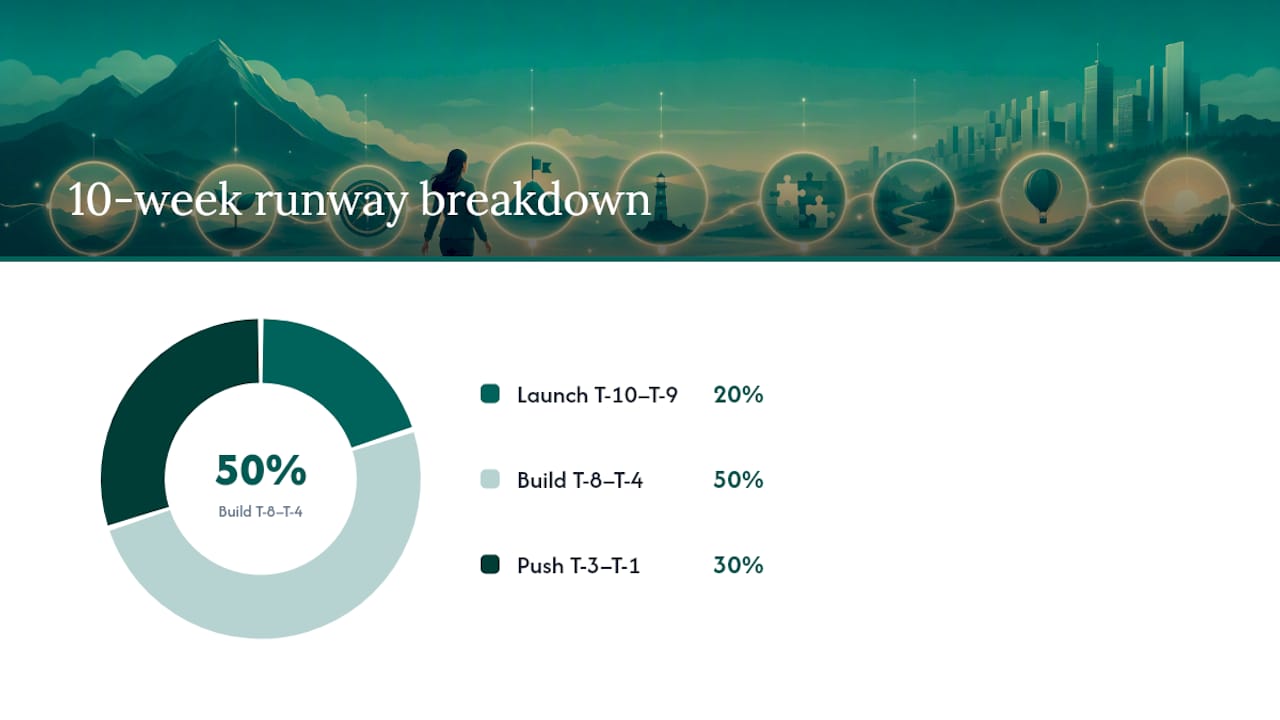
A 10-week pre-event runway with two content beats published per week is a workable default for a mid-size conference. Smaller meetups can compress this into four weeks; enterprise-scale events often stretch it to 14 or more.
The runway breaks into three phases:
After that comes event week itself, followed by a 60 to 90-day post-event publishing window where the real payoff happens. Most teams underinvest here because the event feels “done,” but this window is where recorded sessions turn into the bulk of your content calendar.
Here’s a sample grid you can adapt directly:
| Week | Phase | Beat 1 | Beat 2 |
|---|---|---|---|
| T-10 | Launch | Event announcement blog post | Speaker lineup teaser on LinkedIn |
| T-8 | Build | Speaker spotlight video | Sponsor shoutout email |
| T-6 | Build | Agenda deep-dive post | Early-bird deadline reminder |
| T-4 | Build | Attendee testimonial (past event) | Session preview clip |
| T-2 | Push | Logistics and travel email | Speaker takeover on social |
| T-1 | Push | Final registration push | Live-tweet plan briefing to team |
A 30-day content plan compresses this same structure into two weeks pre-event, event week, and two weeks post, still running roughly two beats per week. Use the compressed version for smaller events where a full 10-week buildup would exhaust your list before doors even open.
Different session formats generate different assets, and matching them up front saves you from discovering gaps after everyone’s gone home. A keynote produces one long-form authority piece plus a handful of quotable clips. A workshop produces skill-adoption content: step-by-step breakdowns, downloadable frameworks, follow-along clips. A panel produces multiple short perspectives you can cut into standalone soundbites.
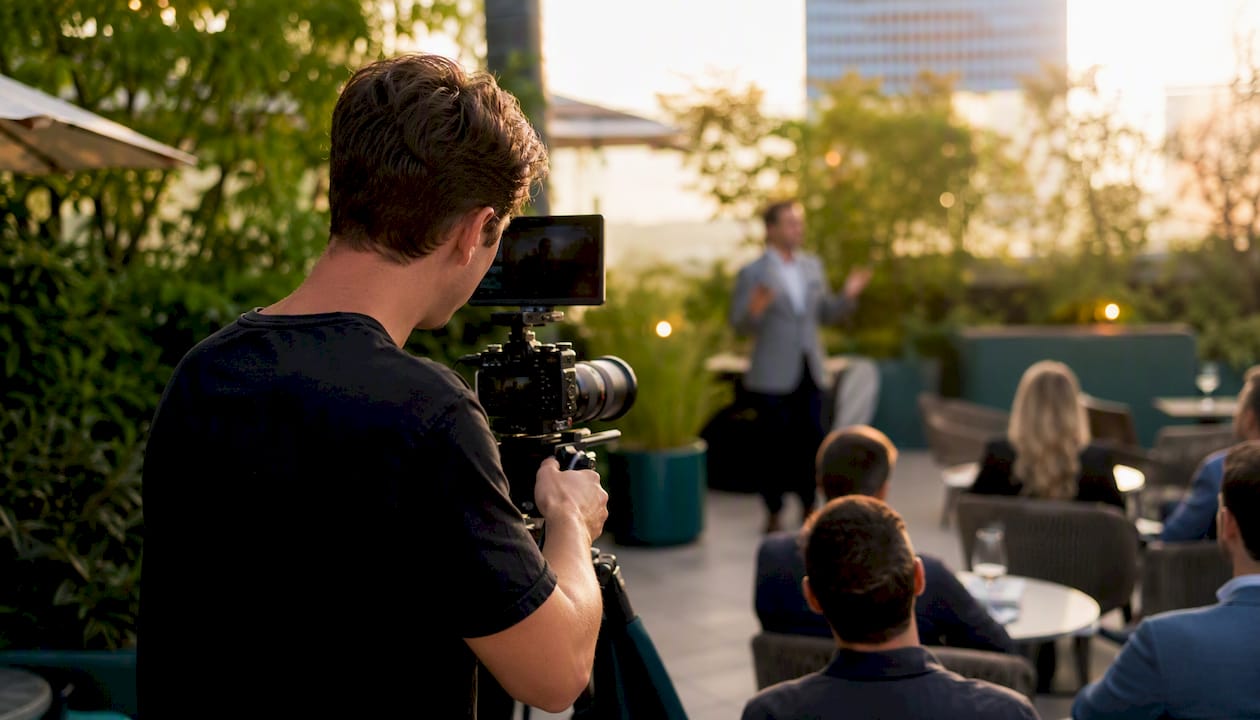
Your capture brief needs five things written down before day one: who owns the shoot, what gets recorded, why (tied to your goal), the quality bar, and the deliverable deadline. Skipping any one of these is how teams end up with beautiful footage nobody has time to edit.
Cvent’s event content repurposing guidance makes a blunt point worth internalizing: prioritize “moments of record” and accept tradeoffs in B-roll if you have to, because a missed keynote reveal can’t be recreated.
| Asset type | Priority | Minimum spec |
|---|---|---|
| Keynote / must-capture moments | Highest | Multi-camera, redundant audio, backup recording |
| Panel and breakout sessions | High | Single camera minimum, clean mic feed, transcript |
| Speaker soundbites | High | Dedicated interview setup, natural light or portable lighting |
| Slide decks and transcripts | Medium | Collected in advance, synced to timestamp |
| B-roll and networking shots | Lower | Handheld acceptable, opportunistic capture |
An event-tech option worth knowing about: services like SnapPix let attendees contribute photos through a shared QR code, which fills your B-roll gaps without pulling your production team off the priority list.
One recorded session should generate a stack of distinct assets, not a single recap video. A typical repurposing matrix looks like this: one long-form hero video, several social microclips, one or two blog posts built from the transcript, a set of email nurture assets, and a handful of clips handed to sales for outreach.
Sequence the release instead of dumping everything at once:
| Asset | Volume | Primary channel |
|---|---|---|
| Hero recap video | 1 | Website, YouTube |
| Social microclips | 8 to 12 | LinkedIn, Instagram, X |
| Blog posts | 1 to 2 | Company blog, SEO |
| Sales enablement clips | 3 to 5 | CRM, sales sequences |
Tag every asset with UTMs and coordinate speaker amplification so you can trace which clip actually drove a meeting request. A cadence without tracking is just noise, and you’ll have no idea which beats earned their keep. This same footage often has a second life beyond the event itself; a keynote can become the seed of a longer founder story video for your website months later.
Your event technology stack should handle six things: registration capture, real-time engagement tracking, speaker management, recording integration, CRM sync, and CMS publishing hooks. Platforms like Cvent, InEvent, SocialTables, and Zoho Backstage each cover this range with varying depth, and it’s worth checking which one already talks to your CRM before you commit.
| Role | Responsibility |
|---|---|
| Content lead | Owns the brief, sets priorities, signs off on final cuts |
| Capture lead | Runs the shoot, manages camera and audio crews on-site |
| Editor/producer | Turns raw footage into publishable assets |
| Social owner | Schedules and posts across channels during the 60 to 90 day window |
| Analytics owner | Tracks UTMs, session engagement, and reports lift to the goal owner |
Registration and engagement data should feed directly into your repurposing decisions. If a session had a spike in live engagement, that’s your signal to prioritize it in the editing queue.
Match your KPIs to the goal you picked at the start, not the other way around.
Tag every content asset with session-specific UTMs so you can trace a lead back to the exact panel or keynote that moved them. Build a feedback loop with sales to measure session-to-meeting lift within 30 days of publishing, then check the fuller picture again at the 90-day mark once the whole repurposing calendar has run. For a mid-size B2B event, a reasonable adaptable target is measuring meeting-conversion lift inside that first 30-day window before you judge the campaign’s full performance.
The most common failure is planning capture after the agenda is already locked, which leaves no room to protect must-capture moments. Close behind: no single content owner, speakers left unbriefed on what’s quotable, capture budget cut first when costs run tight, and rights or consent never actually confirmed in writing.
Pro Tip: Get written reuse consent from every speaker before they walk on stage, not after the recap video is already cut. Retroactive rights requests are where good footage goes to die.
If you’re running hybrid or livestream elements, build in a fallback recording path in case the stream drops, and keep a legal reminder handy: content rights and reuse consent belong in the speaker agreement, not a verbal handshake.
A content-focused production partner is worth it the moment your internal team can’t guarantee multi-camera capture, same-day audio backups, and fast turnaround all at once. Look for these deliverables specifically:
studio2U delivers raw files the same day, a highlight reel within three to five business days, and full clip packs with transcripts within five days, which matters when your 60 to 90-day publishing window starts ticking the moment the event ends. Bringing in a dedicated crew frees your internal team to run the event instead of chasing footage.
The tradeoff nobody talks about enough: you will sometimes sacrifice B-roll to guarantee the moments that actually matter. That’s not a failure of planning, it’s the plan working as intended.
If you take one thing from this: name a single content owner and give them real signoff on capture priorities. Committees don’t make good editorial calls under a live-event clock.
Most planners either handle capture in-house with a stretched marketing team or hire a traditional production company that shows up, films, and disappears for three weeks before sending files. studio2U works differently: portable studios and production crews travel directly to your event, so you get on-site multi-camera capture without shipping your team’s attention away from running the actual show.
What you get lines up with everything in the capture brief above: same-day raw files, a highlight reel in three to five business days, and full clip packs with transcripts inside five days, so your 60 to 90-day repurposing calendar doesn’t stall waiting on footage. That turnaround matters most in the first two weeks after your event, while attendees are still talking about it.
If you have a conference, summit, or company event coming up, visit the studio2U booking page to check availability and get a quote for coverage.
An event content plan should include one clear goal mapped to metrics, a capture brief listing which sessions to record and who owns them, and a publishing cadence covering pre-event, during, and a 60 to 90-day post-event window.
Definitions vary across sources, but the version most planners use is Purpose, People, Product, Promotion, and Place, referring to why the event exists, who attends, what happens, how it’s marketed, and where it’s held.
Common breakdowns include research, goal setting, design, planning and logistics, promotion and content, event execution, and post-event follow-up, though the exact stages vary by event type.
A 10-week pre-event runway works well for mid-size conferences, while a compressed 30-day plan suits smaller events; either way, capture planning should begin before the agenda is finalized.
You need one whenever your internal team can’t guarantee multi-camera capture, fast turnaround, and rights management on its own; a partner like studio2U covers same-day raw files and clip packs within five days.
