5 Zone Event B-Roll Checklist: Editor-Ready for Conferences
%20(1)%201.png)
.png)
.png)
August 22, 2026
%20(1).jpg)

A single focused 2 to 4 hour shoot can create a reusable PR photo library that supplies months of authentic imagery for LinkedIn posts, press requests, and investor materials. Book that shoot before you need it, not the week a reporter emails asking for a headshot by tomorrow. Two things to do right now: schedule a 2 to 4 hour session built around variety rather than a single pose, and set up one cloud folder with a minimal tagging system before a single photo lands in it.
The payoff shows up fast. A well-stocked library means faster LinkedIn posting, sharper engagement, and a press kit that’s ready the moment a journalist or investor asks.
A reusable PR photo library built in one 2 to 4 hour session gives founders months of authentic LinkedIn and press-ready imagery without repeated shoots.
| Point | Details |
|---|---|
| One shoot, many uses | A single 2 to 4 hour session can supply headshots, working shots, and candids for months of posts. |
| Custom beats stock | Authentic workplace imagery builds trust faster than generic stock or AI-generated visuals. |
| Tag before you shoot | Set up a folder and tagging system by role, location, and usage before the session happens. |
| Match shot to platform | Use the right crop and format for profile photos, banners, carousels, and press kits. |
| Studio2U handles delivery | Studio2U provides on-site shoots with retouching, tagged exports, and a five-day turnaround. |
Most executive LinkedIn profiles run on two images: a stiff headshot and a stock photo of a handshake nobody remembers. That’s a missed opportunity, because posts with images consistently outperform text-only posts in views and engagement. A founder posting the same three-year-old headshot alongside every announcement is leaving reach on the table.
Custom photography also does something stock and AI-generated images can’t: it builds trust. Images showing real people in real workplace settings build credibility faster than generic stock photography for professional audiences. AI-generated visuals can fill a gap temporarily, but for founders raising capital or courting press, a library of authentic, varied images signals something a synthetic image never will: this person and this company actually exist and are moving.
The operational case is just as strong:
Treat the session like a shot list, not a photoshoot. Begin with editorial headshots lasting around half an hour. Capture full body, medium, and tight crops, in two or three outfit changes. These anchor your LinkedIn profile photo and press bio. 2. Working shots (30 to 45 minutes). You at your desk, in front of a whiteboard, mid-conversation with a colleague. These read as authentic rather than staged. Then, spend time on candid team interactions, such as laughing in a meeting, walking through the office, or pointing at a screen. Save these for culture posts and recruiting content. Include office and lifestyle environment shots, wide views of your space that provide context beyond portraits, as showcased by a commercial photographer in London. Add speaking-style poses, like standing at a podium or gesturing mid-sentence, useful for investor decks and speaker bios. Investor decks and speaker bios need this exact angle. Use any remaining time for location and outfit variations, moving to different spots or outdoors and swapping jackets or accessories between sets.

Budget 2 hours for a lean session covering the essentials, or 4 hours if you want multiple locations and outfit changes layered in.
Pro Tip: Bring two or three outfit options that vary in formality. A blazer for investor-facing shots, a casual button-down for culture content, give you range without needing a second shoot for months.
A photo library only works if you can find the right image in under 30 seconds. That means naming files consistently the moment they land in your folder, not after a press request forces the issue.
Use a filename structure like 20260214_ceo_officeworking_crop16x9.jpg, combining date, role, shoot type, and crop ratio. It looks tedious the first time and saves real time the tenth.
Build a light tag taxonomy across five fields:
Keep a high-resolution master of every image, ideally RAW or a high-quality JPG, and export separate web-optimized versions sized for each platform. LinkedIn’s image size cheat sheet lays out exact pixel dimensions for profile photos, banners, feed posts, and carousel slides, and shooting multiple crops during the original session avoids the soft, resampled look that comes from uploading undersized files and letting LinkedIn stretch them.
Different assets serve different jobs, and knowing which shot goes where saves you from digging through folders on deadline.
A simple cadence keeps the library from going stale. Borrowing from the classic 4-1-1 framework, mix roughly four value or culture posts, one soft promotion, and one direct announcement for every batch of content you publish, and rotate through your image categories the same way so no single photo gets overexposed.
Studio2U runs these sessions on-site, bringing a portable studio and a director-photographer team directly to your office, so you get editorial headshots, working shots, and candid coverage without anyone commuting to a studio. Every shoot includes retouching and a five-day turnaround, which matters when a funding announcement or press hit is on a clock.
What you actually receive:
Studio2U also works directly with venture firms and accelerators to run portfolio-wide shoots, which is part of why founders in fast-moving hubs like San Francisco, New York, Boston, and Austin use it as their default before a raise or launch.
A photo library built in one afternoon should still look fresh a year later, because the variety was planned before the camera ever came out.
I follow two rules on every shoot: favor human action over a frozen smile, and capture several micro-moments rather than one perfect frame. A hand mid-gesture during a whiteboard session tells a better story than a posed stare at the lens.
Polished executive portraits earn their place for funding announcements and press bios, where credibility is the point. Documentary-style candids work better for culture posts and recruiting content, where the goal is showing, not telling, what it’s like to work with you.

Booking is straightforward: pick a 2 to 4 hour window, tell the team which announcements or campaigns you’re building toward, and Studio2U handles the shot list, lighting, and wardrobe direction on-site.
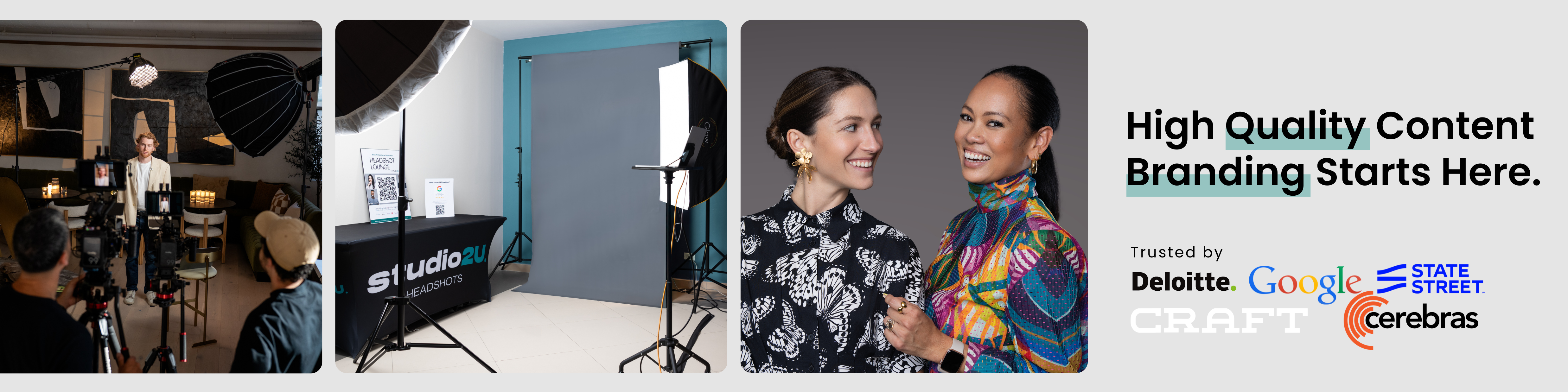
The flat project fee covers the shoot itself, retouching, and a five-day turnaround on the full deliverable package, master files, LinkedIn-ready exports, and a press usage sheet included. It’s built for founders and executives in San Francisco, New York, Boston, and Austin who’d rather spend one afternoon on photography than manage a photographer every time news breaks. If you want a library that carries you through the next six months of posts, announcements, and press requests, book a session with Studio2U and get a shot list built around your calendar.
It’s a posting ratio suggesting roughly four value or culture posts, one soft promotional post, and one direct announcement for every content batch, which helps keep a feed from feeling like a sales pitch.
Book an on-site shoot that covers multiple crops and outfits in one session. Studio2U runs these sessions with a portable studio setup and delivers retouched, LinkedIn-sized exports within five days.
Store your master files and exports in a shared cloud folder tagged by role, shoot type, and usage, so team members or PR contacts can pull an approved image without contacting you directly.
There’s no fixed count, but a 2 to 4 hour session focused on variety, headshots, working shots, candids, and speaking poses, typically produces enough usable images to cover several months of LinkedIn content and press requests.
AI-generated images can work as short-term placeholders, but for founders building investor or press trust, authentic photography of real people in real settings carries more credibility than synthetic visuals.
